Why everyone’s suddenly obsessed with growing plants… without dirt? Explore this beginner friendly guide to Hydroponics for Indoor Gardening!
If you’ve ever wondered how people grow huge, vibrant plants without a speck of soil, welcome to the world of hydroponic gardening, one of the most efficient, modern, and surprisingly beginner-friendly ways to grow food indoors. Whether you’ve seen sleek countertop systems or full-blown vertical farms, hydroponics is changing the way we think about gardening. And once you try it, you might never look at “traditional dirt gardening” the same way again.
Hydroponic gardening replaces soil with nutrient-enriched water, giving plants exactly what they need to grow…directly to their roots! The result? Faster growth, bigger yields, fewer pests, and the ability to garden year-round, even in tiny apartments.
Hydroponics may sound high-tech, but the core idea is beautifully simple: plants don’t need soil, they need what’s in the soil. And with hydroponics, you can deliver those nutrients more efficiently than nature ever could.
Why Choose Hydroponic Gardening?
Hydroponics isn’t just a trend; it’s a revolution. Here’s why so many indoor gardeners (and commercial farms!) are switching:
- Faster growth: Plants grow 20–50% faster in hydroponics because nutrients are delivered directly to the root zone.
- Higher Yields: More food in less space.
- Year-round gardening: Light, temperature, and nutrients stay controlled, so your garden never goes “off-season.”
- No soil, less mess: No bugs hitchhiking in potting mix. No fungus gnats. No moldy soil.
- Better Flavor: Nutrient control = richer, bolder greens.
- Perfect for Small Spaces: Apartments, condos, dorms, basements … hydroponics fits anywhere!
If you’ve ever wanted a garden that listens to you instead of Mother Nature, this is it.
How Hydroponics Actually Works
Plants don’t need soil—they need nutrients, water, oxygen, and light. Hydroponic systems simply deliver those essentials more efficiently.
Most setups include:
- A water reservoir
- A growing tray or pod system
- A pump for water or air circulation
- A grow light
- A nutrient solution
- A growing medium (like rockwool, clay pebbles, or coco coir)
Roots sit in (or above) nutrient-rich water and soak up exactly what they need. Because the environment is controlled, you avoid soil-borne diseases, pests, and fluctuations that slow down growth.
Top Hydroponic Systems (and Which One Is Best for Beginners)
You don’t need an elaborate setup. Here are the most common systems:
• Kratky Method (Beginner-friendly, no pumps)
The plant grows in a jar or tub of nutrient solution. No electricity. No moving parts. Perfect for lettuces, basil, cilantro, and mint.
• Deep Water Culture (DWC)
Roots float directly in nutrient-rich water with an air pump adding oxygen. Great for herbs, leafy greens, and small veggies.
• Nutrient Film Technique (NFT)
A thin stream of nutrients flows along the roots. Seen in many commercial setups. Great for rapid-growth crops.
• Ebb & Flow (Flood & Drain)
Water periodically floods a tray of plants, then drains away. Great for a wide range of crops.
If you’re new, Kratky and DWC are the easiest places to start.
Lighting Needs
Hydroponic plants still need strong light, just not from the sun alone.
Most leafy greens and herbs thrive under:
- 10–14 hours of full-spectrum LED light per day
- Grow lights placed 6–12 inches above the canopy
- Consistent light schedules using built-in timers
💡 If the leaves become pale, leggy, or stretch upward, they want more light. If tips are burning, raise the lights a bit higher.
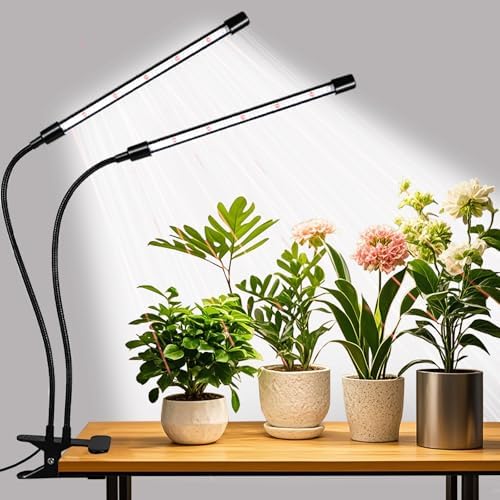
- 【Upgraded Full Spectrum】Eqqiuped with 5 Red+37 Sunlight White LEDs in each bar, which is similar to the sunlight at noon to meet the need…
- 【Auto On/Off Timing Function】The plant grow light comes with a cycle memory timer function, which can Auto turn on/off every day accordin…
- 【3 Switch Modes & 10 Dimmable Level】LED grow lights has 3 switch modes, 10 levels of brightness that can meet the needs of your plant whe…
Watering, Nutrients & Moisture
Watering gets replaced with monitoring. Since the water is constant, your job is simply to keep it clean and balanced.
- Change water every 1–2 weeks
- Use hydroponic nutrient mixes (usually 1–2 tsp per gallon)
- Check the water level regularly
- Keep roots oxygenated with an air stone or circulation pump
🚫 Avoid letting the water go stagnant or run dry—roots need both oxygen and nutrients.Even though roots sit in water, you need to avoid:
- Stagnant water
- Low oxygen
- Algae growth
- Overheating the reservoir
Feeding and Nutrients
Hydroponic nutrients usually come in two or three parts, often labeled A/B or Micro/Grow/Bloom.
Hydroponic nutrients come in easy liquid formulas that include:
- Nitrogen (N)
- Phosphorus (P)
- Potassium (K)
- Calcium
- Magnesium
- Trace minerals
Follow the bottle’s dilution, usually 5–10 mL per gallon. Many growers use a “grow formula” early on, then shift to a “bloom formula” for fruiting plants like tomatoes or strawberries.
🧪 Consistent feeding keeps plants lush, productive, and flavorful.
Most systems require:
- Checking pH (ideal range: 5.5–6.5)
- Refreshing nutrients weekly or bi-weekly
- Keeping water oxygenated (in DWC systems)
🧪 Consistent nutrients = strong stems, big leaves, and fast harvests.

- The Flora Series is a hydroponic-based nutrient system that helps fulfill your plants’ nutrient needs at every stage of growth
- Nutrients included in the Series are FloraMicro, FloraBloom, and FloraGro
- FloraMicro: contains nitrogen and calcium, as well as trace minerals, which are essential for a comprehensive hydroponic plant diet
Common Hydroponic Problems (and Quick Fixes)
Hydroponics is easier than soil, but issues can still pop up:
- Yellowing leaves: Usually nutrient imbalance or pH drift →
- Drooping plants: Low oxygen in the water or failing air pump
- Slimy roots: Root rot → increase aeration and lower water temps
- Algae: Too much light hitting the reservoir→ cover it!
- Stunted growth: Often due to not enough light → Add a grow light!
Hydroponics is forgiving once you dial in lighting and nutrients. After that, it’s mostly smooth sailing.

What You Can Grow (This Is the Fun Part)
Hydroponics can grow almost anything, but the most successful crops include:
- Basil, mint, dill, parsley
- Lettuce, spinach, arugula
- Cherry tomatoes
- Strawberries
- Peppers
- Microgreens
- Bok choy
- Kale
- Cucumbers
Leafy greens grow the fastest—sometimes harvestable in just 3 weeks.
Enjoying Your Hydroponic Harvest
Hydroponic produce isn’t just easy—it’s clean, crisp, and intensely flavorful.Use your hydroponic harvest to:
- Create fresh new meals and recipes without leaving home
- Build salads straight from your kitchen countertop
- Blend fresh herbs into pesto or chimichurri
- Add greens to smoothies
- Garnish meals with homegrown flavor
- Snack on tomatoes and strawberries right off the vine
- Create farm-to-table vibes right at home
Hydroponics turns gardening into a lifestyle—clean, efficient, tech-forward, and delightfully satisfying.